Shikunshi Maki-e Ōnatsume (Four Gentlemen Maki-e Large Tea Caddy) by Saijō Issai
Shikunshi Maki-e Ōnatsume (Four Gentlemen Maki-e Large Tea Caddy) by Saijō Issai
Couldn't load pickup availability
A sophisticated ōnatsume by maki-e master Saijō Issai, executed in gold-colored maki-e on deep black urushi lacquer with refined raden mother-of-pearl inlay. This exceptional piece unites the aesthetics of the Japanese tea ceremony with the rich symbolism of the Shikunshi motif (四君子), the "Four Noble Gentlemen." Comes with the original signed tomobako.
Motif
The lid forms the visual centerpiece of the object, featuring a richly detailed chrysanthemum beneath flowering plum branches. Subtle round raden accents are placed among the blossoms, showing a soft, iridescent sheen depending on the light. Around the body, the decoration continues with graceful seasonal plants and landscape elements, giving the design depth and movement without disturbing the harmony of the whole.
Shikunshi
Shikunshi literally means "Four Noble Gentlemen" and refers to ideal human qualities within Japanese art and culture. Each of the four plants represents a specific inner quality:
- Plum blossom (ume) — resilience and renewal
- Orchid — refinement and inner purity
- Bamboo — flexibility and steadfastness
- Chrysanthemum (kiku) — dignity and contemplative calm
Within the tea ceremony, such motifs were deliberately chosen to evoke an atmosphere of tranquility, refinement, and mindfulness. The Shikunshi theme represents not only the natural cycle of the seasons but also moral and spiritual ideals highly valued by scholars, poets, and tea masters.
Symbolism
In Japanese culture, these plants symbolize inner balance and character: blooming in the cold, bending without breaking, maintaining a modest presence without stepping into the foreground, and remaining dignified even as everything else withers. A natsume with this motif brings this symbolism into the tea room in a subtle way.
Object Details
- Maker: Saijō Issai (西條一斎)
- Title on tomobako: 蒔絵師 / Maki-e master
- Type: Ōnatsume / large tea natsume
- Motif: Shikunshi / Four Noble Gentlemen (四君子)
- Technique: Gold-colored maki-e with raden inlay on black urushi lacquer
- Material: Wood with urushi lacquer
- Dimensions: approx. 7.5 × 7.5 × 7.5 cm
- Period: Shōwa period, mid to late 20th century
- Accessories: Original signed tomobako
- Condition: Very good, with light signs of wear consistent with age and use
Tomobako
The original signed tomobako (wooden storage box) is inscribed 四君子 大棗 — Shikunshi Ōnatsume (“large natsume with the Four Noble Gentlemen motif”). Additionally, the box bears the signature 塗師 西條一斎 — Nurishi Saijō Issai (“Lacquer master Saijō Issai”). The presence of the original tomobako enhances both the provenance and the collectability of the object. Within the tradition of Japanese tea objects, a signed storage box forms an important part of a work's presentation, authenticity, and documentation.
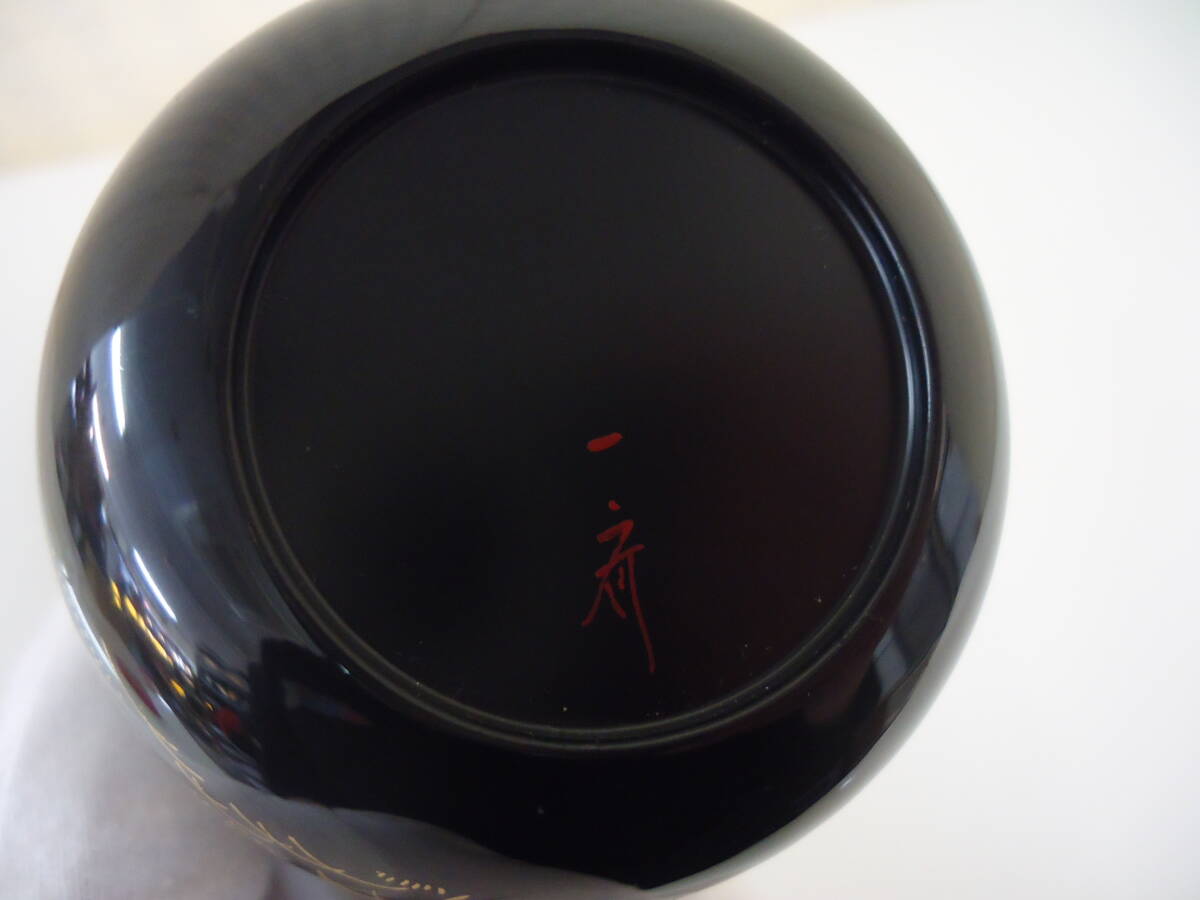
Signature and maker
Saijō Issai (b. 1937, Osaka; real name 奥津義峰 / Okutsu Yoshimine) is a Japanese master of maki-e lacquerware. He learned the craft from his father, Okutsu Yōhō (奥津洋方), and was active in the tradition of fine urushi work from the 1950s onwards. From the 1960s, he was selected multiple times for the Japan Traditional Crafts Exhibition (日本伝統工芸展) and its regional Kinki section. In 1989, he was appointed director of the Osaka Crafts Association (大阪工芸協会) and received several awards for his cultural and artisanal contributions, including the Osaka Prefecture Cultural Merit Award in 1993. From his studio in Nara, he continues the tradition of sophisticated tea ceremony aesthetics and classical Japanese lacquerware through his students.
Delen